Why Lymphatic Drainage Massage Uses Almost No Pressure, Unlike a Regular Massage
Quick Answer: Lymphatic vessels sit just beneath the skin and have thin walls that collapse under firm pressure, so deep-tissue force actually works against fluid movement rather than helping it. Light, rhythmic, skin-level strokes directed toward lymph nodes are the technically correct approach — not a gentler substitute for real massage.
You booked a lymphatic drainage massage expecting the usual: elbows, pressure points, that specific noise you make when someone finds a knot.
Instead, a therapist is stroking your skin so lightly it feels like they’re checking whether you’re awake. Your first thought is that you’re being short-changed.
You’re not. That feather-light pressure isn’t a weaker version of massage — it’s specific to how the lymphatic system physically works, and firmer would be worse.

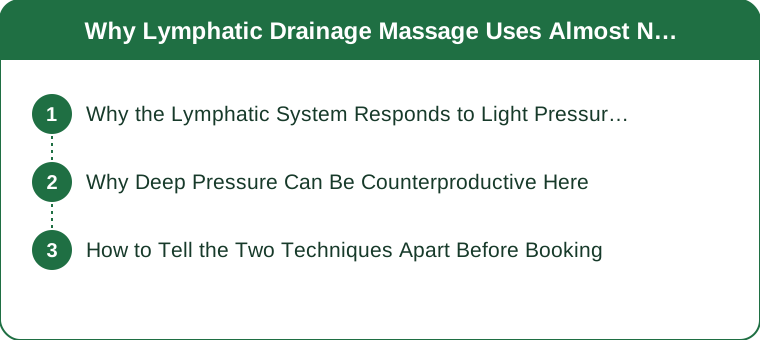
Why Does the Lymphatic System Need Such Light Pressure?
It comes down to where the vessels are and what they’re made of.
The lymphatic capillaries that this technique targets sit just beneath the surface of your skin — a fraction of a millimetre down, in the layer above the muscle tissue a deep-tissue massage is working on. They’re an entirely different depth.
They’re also structurally delicate. These are thin-walled vessels designed to collect fluid at low pressure, not tubes built to withstand force. Press firmly and you flatten them, which closes the very channel you’re trying to move fluid through.
There’s a second reason light works. Unlike your circulatory system, the lymphatic system has no pump. There’s no lymphatic heart. Fluid moves through it via muscle contraction, breathing, and the gentle stretching of the vessel walls themselves. Light, rhythmic skin stretching mimics that mechanism directly — it’s speaking the system’s own language.
So the lightness isn’t restraint. It’s precision.
Why Can Deep Pressure Actively Work Against You Here?
This is the part that surprises people: heavier isn’t a stronger version of the same thing. It’s a different thing that interferes.
Applying deep, static, muscle-focused pressure over superficial lymphatic vessels can temporarily compress and block the fluid movement the technique is meant to encourage. You’re not under-treating — you’re pushing in the opposite direction.
It’s a bit like trying to help water through a garden hose by standing on it.
Deep tissue massage is genuinely excellent at what it’s for: muscle tension, adhesions, trigger points, the knot between your shoulder blades that has been there since March. Those are real, valuable goals. They just aren’t this goal, and the two techniques aren’t on a shared intensity dial.

What Nobody Tells You About Booking One
The term is used loosely. “Lymphatic drainage” appears on a lot of spa menus attached to sessions that are essentially a light Swedish massage, or in some cases a firm one with a nicer name. The training behind proper manual lymphatic drainage is specific and certifiable, and not every provider using the phrase has it.
Direction matters as much as pressure. Genuine technique moves fluid toward the relevant lymph nodes in a deliberate sequence, often clearing the nodes first before working the limb or area. Random light stroking in whatever direction feels nice is not the same thing, even at the right pressure.
It’s usually not a one-session treatment. Where the technique is used clinically, it’s typically part of a course over weeks, often alongside compression. A single spa session is a pleasant experience, not a protocol.
It shouldn’t hurt at all. Not “good hurt,” not “tolerable hurt.” If a session described as lymphatic drainage is painful, something is off — either the pressure or the description.
The dramatic before-and-after photos deserve skepticism. Some visible change after a session is plausible, especially with fluid retention. Photos taken minutes apart with different postures and lighting are marketing, and the effect in those cases is usually temporary regardless.
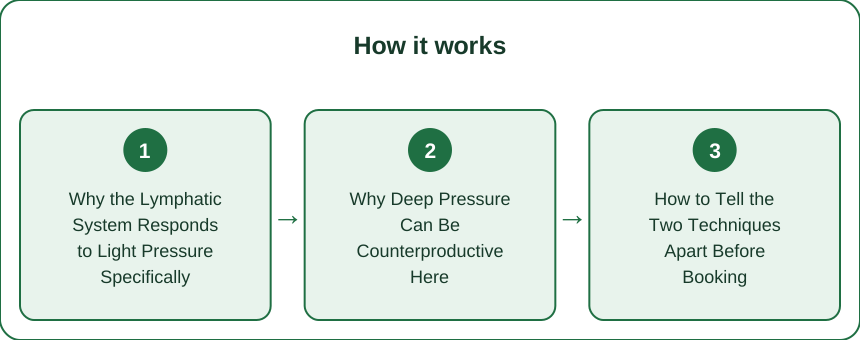
How Do You Check Before You Book?
One phone call, three questions:
- “Does the session use light, rhythmic strokes directed toward the lymph nodes, or deep static pressure on muscle?” The answer tells you immediately which technique you’re actually buying.
- “What training does the therapist have in manual lymphatic drainage specifically?” There are recognized certifications for this. A confident, specific answer is a good sign; vagueness is informative too.
- “How many sessions would you suggest for what I’m looking for?” A provider who says “one should do it” for a persistent issue is selling something different from what a clinician would recommend.
A ninety-second clarifying question prevents booking an hour of the wrong technique — and prevents the more common disappointment, which is booking the right technique while expecting the wrong sensation.
Practical note for after: whatever the session does, sitting still afterward in tight, digging clothing works against you. The system moves on muscle contraction and easy movement, so a gentle walk in something non-restrictive — soft high waist leggings rather than a waistband that binds — is a more sensible follow-up than lying down for three hours.
When to see a professional: manual lymphatic drainage has genuine clinical applications, particularly in managing lymphedema after lymph node removal or damage, and in some post-surgical recovery. Those situations call for a trained therapist working with your medical team, not a spa booking. See a doctor rather than a massage therapist if you have new, persistent or one-sided swelling, swelling with redness, warmth, pain or fever, or any swelling alongside shortness of breath — those can indicate infection, a clot or a cardiac issue, and none of them are a massage problem.
FAQ
Is lymphatic drainage massage supposed to feel like nothing?
Close to it. The pressure is often described as barely more than the weight of a hand, and the sensation is more like a rhythmic skin stretch than a massage. Many people find it deeply relaxing precisely because it’s so light — some fall asleep.
Can I do lymphatic massage on myself?
Simple self-massage techniques exist and are sometimes taught to patients by trained therapists, particularly for the face and neck. The direction and sequence matter, so learning it from a qualified source beats copying a video. If you’re managing a diagnosed condition, get your technique from your care team.
What’s the difference between lymphatic drainage and deep tissue massage?
Almost everything: depth, pressure, direction, rhythm and purpose. Deep tissue targets muscle tension with firm, sustained pressure. Lymphatic drainage targets superficial fluid movement with very light, rhythmic strokes toward the lymph nodes. They aren’t points on the same scale.
TL;DR
- Lymphatic vessels sit just under the skin and collapse under firm pressure — light is technically correct, not weaker.
- The system has no pump, so it responds to gentle rhythmic skin stretch, not force.
- Deep pressure can block the fluid movement the technique is meant to create.
- Direction matters as much as pressure — proper technique works toward lymph nodes in sequence.
- Ask before booking whether it’s light rhythmic work or deep muscle work; the term gets used loosely.
- New, one-sided or painful swelling is a doctor’s question, not a spa booking.
Keep Reading
This article is for general informational purposes only and is not medical advice. Always consult a qualified health professional for guidance specific to you.