Why Lymphatic Drainage Feels Amazing Once and Does Almost Nothing the Next Time
Quick Answer: Lymphatic drainage results depend heavily on your hydration, sodium intake, sleep, and how much fluid was already sitting in your tissue that day — the technique itself doesn’t change much session to session, but your starting baseline does, which is why the same routine can look dramatic once and subtle the next time.
Your first lymphatic drainage session left your face visibly less puffy within the hour. The third one, done the exact same way, barely seemed to register. Nothing about the technique changed — what changed was you.

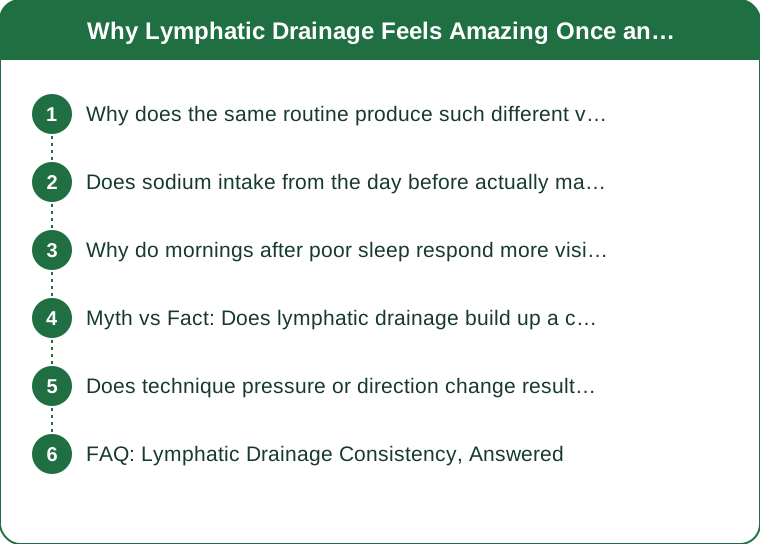
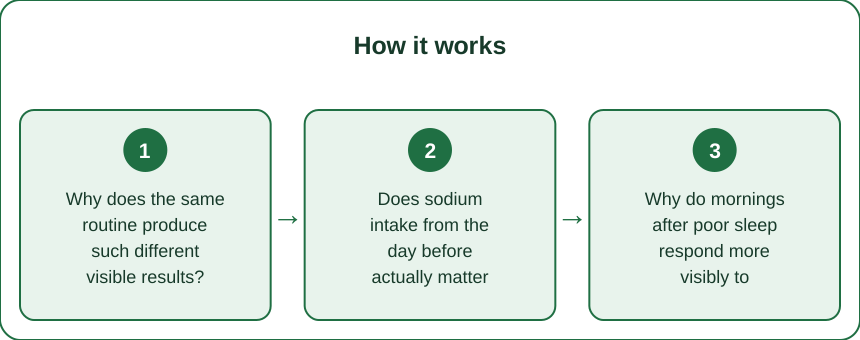
Why does the same routine produce such different visible results?
Lymphatic drainage moves fluid that’s already accumulated in tissue — it doesn’t create the effect from nothing. If you started the session already relatively de-puffed (better sleep, lower sodium the day before, well hydrated), there’s simply less excess fluid to visibly move, so the result looks less dramatic even though the technique worked exactly the same.
Does sodium intake from the day before actually matter that much?
Yes, more than most people expect. High-sodium meals cause the body to retain water to dilute the excess sodium, and that retained fluid shows up in tissue within 12-24 hours — often peaking right around the time of a next-morning drainage session, which is part of why some sessions feel more dramatic than others.
Why do mornings after poor sleep respond more visibly to drainage?
Poor sleep disrupts normal overnight fluid regulation, and lying flat for a full night already encourages fluid to pool in the face specifically. A session after a rough night has more accumulated fluid to move than one after a great night, which is why ‘worst sleep, best drainage results’ isn’t a coincidence.

Myth vs Fact: Does lymphatic drainage build up a cumulative effect over time?
Myth: that each session permanently improves your baseline drainage capacity on its own. Fact: the lasting improvement comes mostly from consistent supporting habits (hydration, movement, sodium moderation) alongside the sessions — the massage itself moves fluid in the moment, but it’s the habits around it that determine whether puffiness stays reduced between sessions.
Does technique pressure or direction change results as much as timing does?
Direction matters (always toward lymph nodes, never away), but within correct technique, timing and your fluid baseline that day usually explain more of the visible variation than small differences in pressure or exact stroke pattern.
FAQ: Lymphatic Drainage Consistency, Answered
Should you track something before each session to predict results?
A quick note on sodium intake and sleep quality the day before is more predictive of how visible a session’s results will be than anything about the session itself.
Is it a bad sign if a session does nothing?
No — it usually means you started with less fluid retention that day, which is actually the better outcome even though it looks less dramatic in the moment.
Does drinking water right before a session help or hurt visible results?
Hydrating consistently in the days before helps overall lymph flow, but chugging water immediately before a single session won’t meaningfully change that day’s visible result.
TL;DR:
- Lymphatic drainage moves existing fluid — it can’t create a dramatic result if there wasn’t much fluid to move that day
- High sodium and poor sleep the day before both increase fluid retention, making the next session look more dramatic
- A subtle result usually means you started better, not that the technique failed
- Consistent hydration and sodium habits between sessions matter more than any single session’s technique
Before judging a session as ineffective, check what you ate and how you slept the night before — that’s usually the real variable.
Keep Reading
This article is for general informational purposes only and is not medical advice. Always consult a qualified health professional for guidance specific to you.