Why Compression Helps Some Swelling and Makes Other Swelling Worse
Quick Answer: Compression helps swelling caused by fluid pooling from gravity, venous insufficiency and lymphatic congestion — it supports the vessels and assists return flow. It can be harmful when swelling comes from poor arterial circulation, acute infection, uncontrolled heart failure or an untreated blood clot, because compressing tissue that is already short of arterial blood makes it worse. The critical step is knowing which one you have, which sometimes needs a clinician rather than a guess.
Compression socks are sold as universally helpful. They are not.
For most everyday swelling they are excellent. For a specific short list of causes they are the wrong tool, and in a couple of cases genuinely dangerous.
Here is how the distinction works.

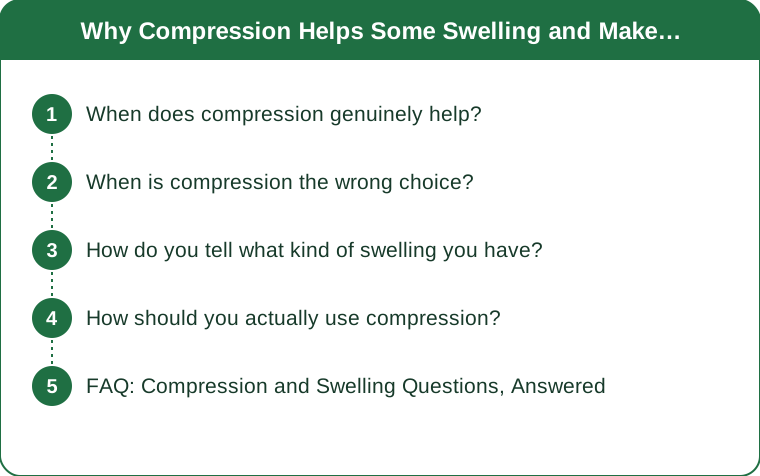
When does compression genuinely help?
When the problem is fluid struggling to get back up, and the arteries delivering blood are healthy.
Gravity-related pooling. Long flights, standing all day, hot weather. Fluid accumulates in the lower legs because venous return depends on muscle pumping and you have not been pumping. Graduated compression directly assists this and works well.
Chronic venous insufficiency. When vein valves do not close properly, blood refluxes downward and pressure builds in the lower leg. Compression is a mainstay of management and has good evidence behind it.
Lymphoedema, under guidance. Compression is a core component of lymphoedema management, but the type, pressure and application should be specified by a lymphoedema specialist. Off-the-shelf socks are not the same thing as prescribed garments.
Post-exercise recovery. Modest evidence, mostly around reduced perceived soreness rather than dramatic physiological effects. Low risk and some people find it clearly helpful.
Pregnancy-related leg swelling. Common and generally responsive to compression, and often recommended. Worth confirming with your midwife or doctor, particularly if the swelling is sudden or asymmetric.
Prolonged immobility. Long-haul travel and post-surgical periods, where compression is used specifically to reduce clot risk alongside movement.
When is compression the wrong choice?
A short list, and every item on it matters.
Peripheral arterial disease. This is the most important one. If arterial blood supply to the leg is already reduced, external compression further restricts it and can cause tissue damage. Compression is generally contraindicated below certain ankle-brachial pressure index values, which is why a clinician checks before prescribing.
Acute deep vein thrombosis that has not been assessed. A sudden, painful, unilateral swollen calf needs urgent medical assessment, not a compression sock. Compression may well be part of treatment afterwards, but only after diagnosis.
Uncontrolled or decompensated heart failure. Compressing the legs shifts fluid centrally. In someone whose heart cannot handle the additional preload, that can worsen breathlessness. This needs medical guidance.
Active skin infection or cellulitis. A hot, red, tender, spreading area needs medical attention. Compressing over active infection is not appropriate without advice.
Significant peripheral neuropathy. If you cannot feel pressure or pain properly, you cannot detect a garment that is too tight or damaging the skin. Compression can still be used, but with careful monitoring by someone else.
Any sudden, one-sided, painful swelling. Regardless of your history, this pattern warrants same-day medical assessment. This is general information, not medical advice.

How do you tell what kind of swelling you have?
A few features distinguish the common patterns, though none replaces an assessment.
Both legs versus one leg. Bilateral swelling is more often systemic — gravity, heat, medication, heart, kidney or liver related. Sudden unilateral swelling is more concerning and needs assessment.
Does it improve overnight? Gravity-related and venous swelling usually reduces substantially by morning. Lymphoedema typically does not resolve fully with elevation.
The pitting test. Press firmly on the swollen area for several seconds. A dent that stays suggests pitting oedema, common in venous and systemic causes. Non-pitting swelling is more suggestive of lymphoedema, particularly if the skin feels thickened.
Stemmer’s sign. If you cannot pinch and lift a fold of skin at the base of the second toe, that is a recognised indicator of lymphoedema.
Skin changes. Brown staining around the ankles suggests chronic venous disease. Thickened, firm skin suggests longstanding lymphoedema.
Pain and heat. Significant pain, redness and warmth point toward infection or clot rather than simple fluid accumulation, and both need assessment.
Timing and triggers. Swelling that appears after long standing and resolves with elevation behaves very differently from swelling that appeared over three days and has not gone.
When in doubt, get it checked. New swelling, one-sided swelling, painful swelling and swelling with breathlessness all warrant medical assessment rather than self-management.
How should you actually use compression?
Correctly, which is more specific than most people realise.
Put them on first thing in the morning. Before the leg has had time to swell. Applying compression over an already swollen leg is much harder and less effective.
Use graduated compression. Tightest at the ankle, decreasing up the leg. This is what assists return flow. Uniform-pressure garments do not achieve the same effect.
Choose the right class. 15 to 20 mmHg for travel, mild pooling and prevention. 20 to 30 mmHg for venous insufficiency and more established swelling, and this class is where getting advice becomes worthwhile. Above that is generally prescribed and fitted.
Get measured rather than guessing. Sizing by shoe size is inadequate. Ankle and calf circumference determine the fit, and a garment that is too small can create a tourniquet effect.
Check your skin every day. Redness, indentation lines that do not fade, numbness, tingling or colour change all mean take them off and reassess.
Do not sleep in them unless told to. Standard compression is designed for upright wear. Lying down changes the pressure dynamics and most garments are not intended for overnight use.
Replace them every three to six months. Elastane degrades and the pressure profile with it. A stretched-out garment does very little.
Move as well as compress. The calf muscle pump does more than any garment. A short walk every hour beats a sock and a chair.
Elevate above heart level when you can. Fifteen minutes with legs genuinely raised does a great deal.
Seasonal note: swelling that improves as summer heat drops through autumn is a useful clue that heat-related vasodilation was a major contributor. Swelling that stays the same or worsens as it cools deserves a closer look.
FAQ: Compression and Swelling Questions, Answered
Can I just buy compression socks online?
For mild travel and standing-related swelling in an otherwise healthy person, 15 to 20 mmHg graduated socks are widely available and low risk. For anything persistent or medical, get assessed and measured.
How tight is too tight?
Firm but not painful. Numbness, tingling, colour change, or deep marks that persist after removal all mean the garment is wrong.
Should I wear them on a flight?
Graduated compression on long flights is a common recommendation, alongside moving regularly and staying hydrated.
Do they help with varicose veins?
They manage symptoms and can slow progression, but they do not remove existing varicose veins. Treatment options are worth discussing with a clinician.
Why do my legs swell more in hot weather?
Heat causes blood vessels to dilate, which increases fluid movement into tissue. It is a very common and usually benign cause of bilateral swelling.
Can medication cause swelling?
Yes — several common medication classes including some blood pressure drugs can cause leg oedema. Do not stop anything on your own; raise it with your prescriber.
TL;DR:
- Compression helps gravity pooling, venous insufficiency and lymphoedema — problems of fluid return.
- It is the wrong tool for arterial disease, undiagnosed clots, uncontrolled heart failure and active infection.
- Sudden, one-sided, painful swelling needs same-day assessment, not a sock.
- Put them on first thing in the morning, use graduated pressure, and get measured properly.
- Movement beats compression. Do both.
If you do not know which type of swelling you have, that is the question to answer before buying anything.
Keep Reading
This article is for general informational purposes only and is not medical advice. Always consult a qualified health professional for guidance specific to you.