Gua Sha vs. Lymphatic Drainage Tools: Which One Actually Does What
Quick Answer: Gua sha stones and dedicated lymphatic tools (like rollers or scrapers marketed specifically for drainage) work through the same basic mechanism — light pressure guiding fluid toward drainage points — so the tool matters less than your technique and direction of movement.

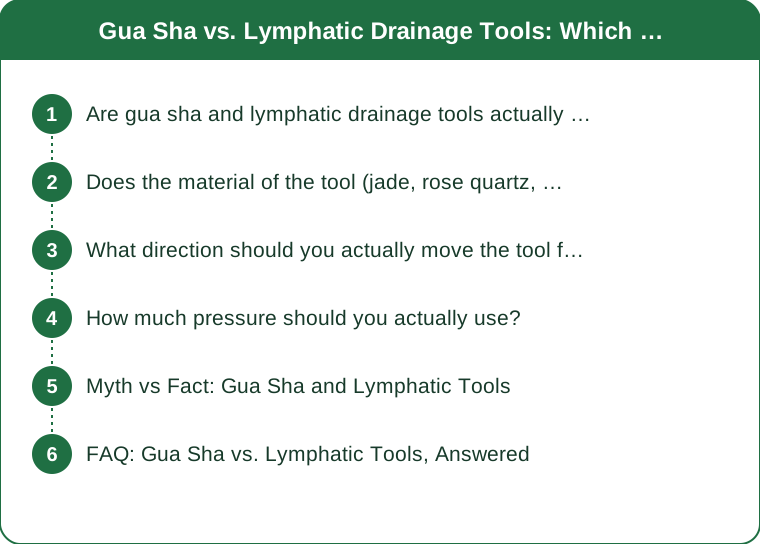
Are gua sha and lymphatic drainage tools actually different mechanisms?
Not fundamentally. Both rely on light, directional pressure that encourages fluid movement toward lymph nodes, typically at the jaw, neck, and collarbone. Gua sha originated as a broader traditional practice while ‘lymphatic drainage tool’ is often just marketing language for a similarly-shaped scraper or roller — the physics of what they’re doing is comparable.
Does the material of the tool (jade, rose quartz, stainless steel) actually matter?
Mostly not for the drainage effect itself — the shape and how you use it matters more than the material. Cooler materials like stainless steel or jade can add a soothing, slightly de-puffing sensation from temperature, which some people find pleasant, but this is a comfort factor rather than a difference in lymphatic effectiveness.
What direction should you actually move the tool for it to help?
Always move toward the lymph nodes, not away from them — generally down the neck toward the collarbone, and outward from the center of the face toward the ears and jaw. Moving in the wrong direction doesn’t cause harm, but it also doesn’t help move fluid where it needs to go, so the technique matters more than the tool choice.

How much pressure should you actually use?
Far less than most people assume — lymphatic vessels sit very close to the skin’s surface, so firm, deep pressure is unnecessary and can even be counterproductive by working on tissue layers below where lymph actually flows. A light touch, similar to smoothing on a lotion, is enough.
Myth vs Fact: Gua Sha and Lymphatic Tools
Myth — a more expensive tool produces meaningfully better drainage results. Fact — technique, direction, and consistency matter far more than the tool’s price point or material. Myth — you need to press hard to actually move lymph fluid. Fact — lymphatic vessels are shallow and respond to light pressure; heavy pressure targets deeper tissue instead.
FAQ: Gua Sha vs. Lymphatic Tools, Answered
How often should you use a gua sha or lymphatic tool for noticeable results?
Most people see the best de-puffing results with daily use of 3-5 minutes, since the effect is largely temporary fluid movement rather than a permanent structural change.
Can you use these tools on your body, not just your face?
Yes — the same directional, light-pressure principle applies to legs and arms, typically moving upward toward the nearest lymph node cluster (behind the knee, in the groin, or under the arm).
Is it safe to use a gua sha tool every single day?
Generally yes for light pressure use, though give your skin a break if you notice irritation, and always use a facial oil or serum as a glide layer to avoid dragging the skin.
TL;DR:
- Gua sha stones and marketed lymphatic tools work through the same light-pressure mechanism
- Material affects comfort and sensation more than actual drainage effectiveness
- Always move toward lymph nodes — down the neck, out toward the jaw and ears
- Light pressure works better than firm pressure since lymph vessels sit close to the skin
If you already own a gua sha stone, there’s no real need to buy a separate ‘lymphatic’ tool — the technique is what does the work.
Keep Reading
This article is for general informational purposes only and is not medical advice. Always consult a qualified health professional for guidance specific to you.