Does Lymphatic Drainage Exercise Actually Do Anything, or Is It Mostly Hype?
Quick Answer: Movement genuinely does support lymphatic flow because, unlike blood, lymph has no central pump and relies on muscle contraction to circulate — but specific ‘lymphatic drainage workouts’ aren’t dramatically more effective than regular movement, walking, or normal exercise at achieving this same effect.
The lymphatic system does need movement to function well — the question is whether it needs a specialized routine, or just any movement at all.

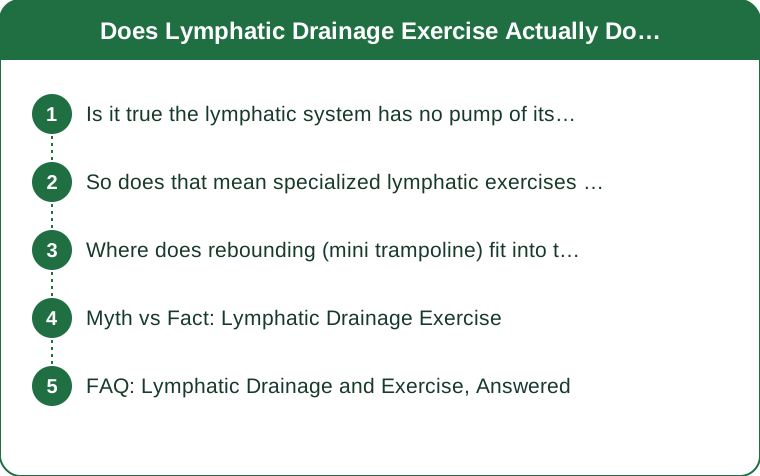
Is it true the lymphatic system has no pump of its own?
Yes, this part is accurate. Unlike the circulatory system, which has the heart as a dedicated pump, the lymphatic system relies on skeletal muscle contraction, breathing, and gravity changes to move lymph fluid through its vessels. This is real physiology, not wellness marketing.
So does that mean specialized lymphatic exercises are necessary?
Not specifically — any regular movement that contracts muscles (walking, regular strength training, yoga, even fidgeting throughout the day) provides this same muscle-pump effect. Dedicated ‘lymphatic drainage’ routines aren’t shown to meaningfully outperform general movement for this purpose.

Where does rebounding (mini trampoline) fit into this?
Rebounding does involve repeated muscle contraction and gravity changes, both of which support lymph flow — but so does jogging, jumping rope, or a brisk walk. Rebounding isn’t uniquely superior; it’s simply one of several movement types that provides the underlying mechanism.
Myth vs Fact: Lymphatic Drainage Exercise
Myth: Sitting all day ‘clogs’ your lymphatic system in a harmful way requiring special detox routines. Fact: Prolonged sitting does reduce lymph flow somewhat, but regular movement breaks — not a specific detox protocol — address this effectively.
Myth: Lymphatic drainage massage or exercise removes toxins from the body. Fact: The lymphatic system does filter waste products as part of immune function, but ‘toxin removal’ framing overstates what any single workout accomplishes in isolation.
Myth: You need special lymphatic-specific equipment or classes for this to work. Fact: Regular daily movement provides the same core mechanical benefit as branded lymphatic workout programs.
FAQ: Lymphatic Drainage and Exercise, Answered
Is dry brushing or lymphatic massage worth doing alongside exercise?
These may feel good and provide mild, temporary local effects, but aren’t shown to meaningfully outperform regular movement for overall lymphatic function.
How much movement is actually enough to support lymphatic flow?
Regular movement breaks every 30-60 minutes if desk-bound, plus normal daily exercise, covers the core mechanism well without needing a specialized routine.
Are there real medical conditions where lymphatic exercise matters more specifically?
Yes — lymphedema and certain post-surgical conditions benefit from specific, medically guided lymphatic drainage techniques, which is a different context from general wellness claims.
TL;DR:
- The lymphatic system genuinely has no central pump and relies on muscle movement
- Regular movement of almost any kind provides this same muscle-pump benefit
- Specialized ‘lymphatic drainage’ routines aren’t shown to meaningfully outperform general exercise
- Medical conditions like lymphedema are a separate context needing professional guidance
This is general information, not medical advice — anyone with diagnosed lymphatic conditions should follow guidance from a specialist rather than general wellness content.
Keep Reading
This article is for general informational purposes only and is not medical advice. Always consult a qualified health professional for guidance specific to you.