Does Dry Brushing Actually Do Anything for Lymph Flow?
Quick Answer: Dry brushing has minimal direct evidence for meaningfully moving lymph fluid, but the light pressure and movement may offer mild circulation and exfoliation benefits. It’s not harmful for most people, just not the lymphatic powerhouse marketing claims.
Dry brushing videos promise reduced puffiness, better circulation, and detoxified lymph — all from a few minutes with a bristle brush. The actual evidence tells a more modest story.

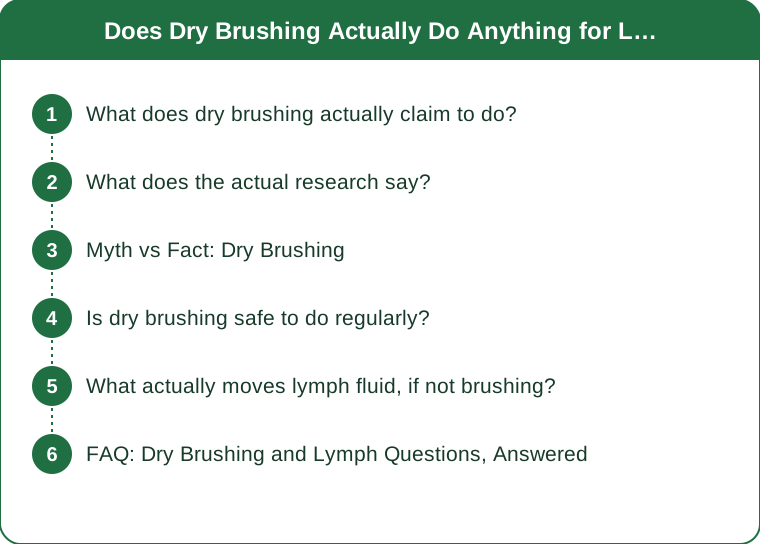
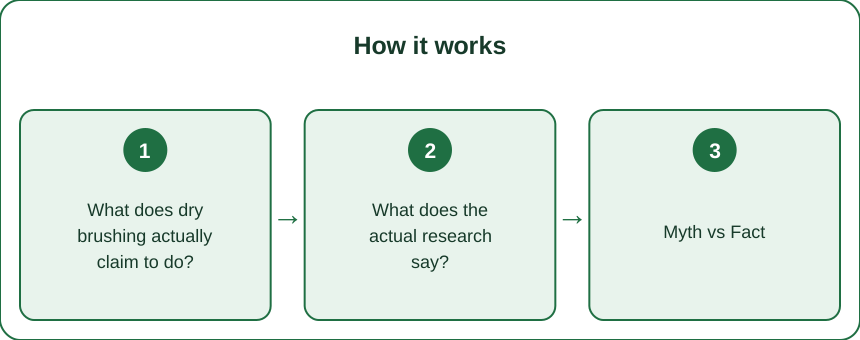
What does dry brushing actually claim to do?
Proponents claim brushing toward the heart stimulates lymphatic vessels just under the skin, encouraging fluid movement and reducing puffiness or ‘toxin buildup.’ The lymphatic system does sit close to the skin’s surface in places, which is the basis for the claim.
What does the actual research say?
There’s very limited controlled research specifically on dry brushing and lymphatic flow. Most existing evidence on lymphatic stimulation comes from manual lymphatic drainage massage (a trained technique with specific, gentle pressure patterns), not from consumer dry brushing.
What dry brushing likely does provide: mild skin exfoliation and a temporary increase in surface blood flow from the friction — both real, minor effects, just not the same as clinically meaningful lymphatic drainage.
Myth vs Fact: Dry Brushing
Myth: Dry brushing ‘detoxifies’ your body. Fact: Your liver and kidneys handle detoxification; there’s no evidence skin brushing removes toxins. This claim isn’t supported by physiology.
Myth: Dry brushing has no benefit at all. Fact: The mild exfoliation and brief circulation boost are real, minor effects — just don’t expect measurable lymphatic drainage results.

Is dry brushing safe to do regularly?
For most people, yes — light pressure, done a few times a week, carries low risk. Avoid brushing over broken skin, rashes, varicose veins, or areas with active inflammation, and use light pressure rather than aggressive scrubbing, which can irritate skin over time.
What actually moves lymph fluid, if not brushing?
Movement is the primary driver — lymph fluid relies on muscle contraction and joint movement to circulate, since (unlike blood) it has no central pump. Walking, deep diaphragmatic breathing, and general daily activity do more for lymphatic flow than any surface technique.
FAQ: Dry Brushing and Lymph Questions, Answered
Should I dry brush before or after showering?
Before — brushing is done on dry skin, then followed by a shower to rinse off exfoliated skin cells.
How often should I dry brush?
2-3 times a week is a common, low-irritation frequency; daily brushing increases the risk of skin irritation for many skin types.
Does dry brushing help with cellulite?
No strong evidence supports this claim. Any temporary smoothing appearance is likely from short-term circulation and skin plumping, not fat or cellulite reduction.
TL;DR:
- Direct evidence for dry brushing improving lymph flow is limited and mostly anecdotal
- Real effects are mild: light exfoliation and a brief circulation bump
- Movement, walking, and deep breathing do more for actual lymph flow than brushing
- It’s low-risk for most people if done gently, just not the lymphatic fix marketing suggests
If you enjoy the ritual, there’s no strong reason to stop — just don’t expect it to replace movement as your main lymphatic support.
Keep Reading
This article is for general informational purposes only and is not medical advice. Always consult a qualified health professional for guidance specific to you.