Why Your Ankles Swell on Flights, and What Actually Helps
Quick Answer: Swelling on flights happens because the calf muscle pump, which normally moves fluid and blood upward against gravity, stops working when you sit still for hours. Cabin pressure, dry air, and dehydration add to it. What has evidence: graduated compression socks, regular ankle and calf movement, and walking the aisle roughly every hour. What does not: elevating your feet on a bag for most of the flight, aspirin as a routine measure, or avoiding salt on the day. Swelling in one leg only, with pain or warmth, is a different situation and needs medical attention.
Ankle swelling on a long flight is almost universal and almost always harmless. It is also almost entirely preventable, which most people do not realize.
The mechanism is one specific pump switching off.
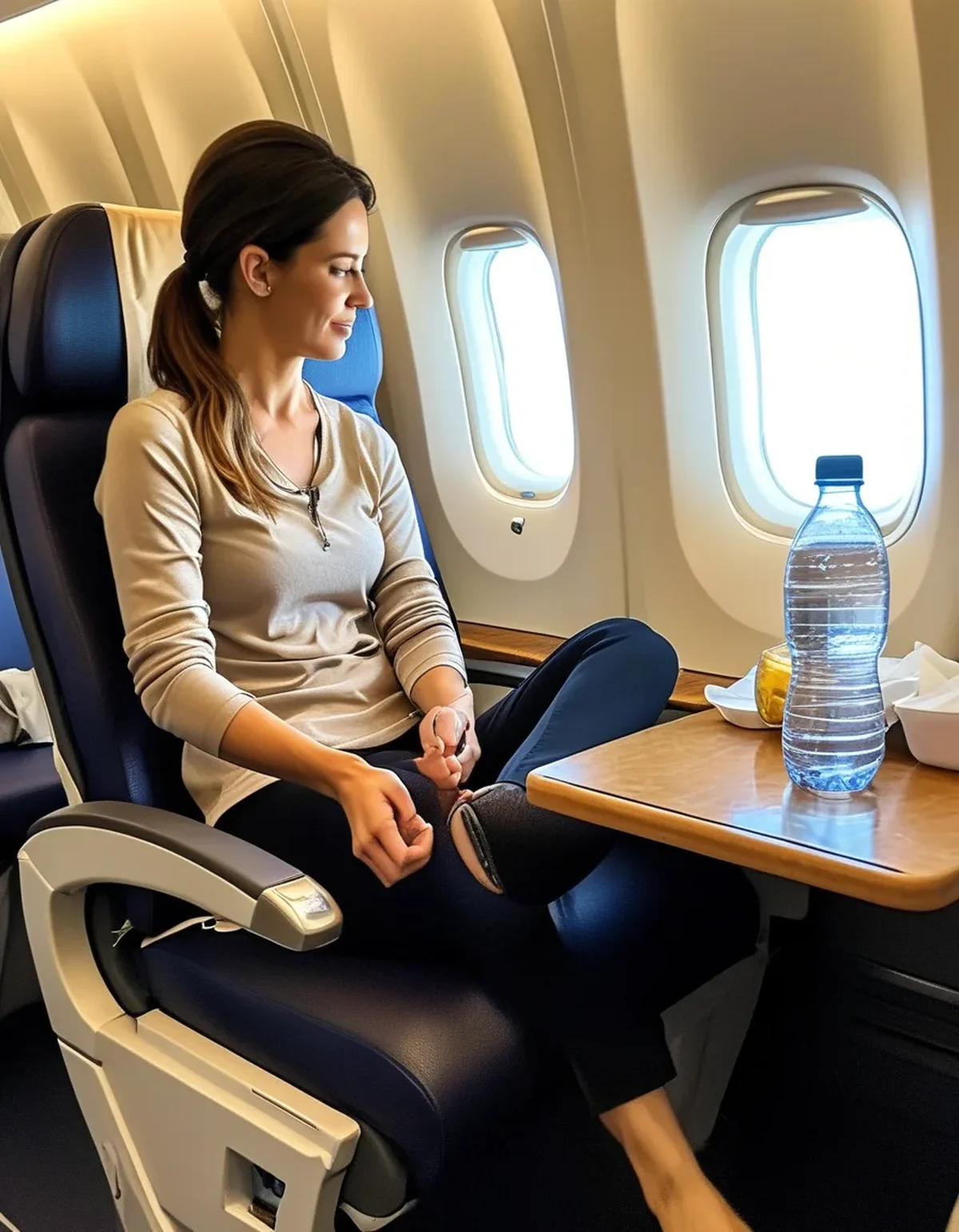
Why does sitting still cause swelling?
Because the primary mechanism for returning fluid from your legs is muscular, not cardiac.
Blood and lymph return from your legs against gravity, and they rely on the calf muscle pump. Every time your calf contracts, it squeezes the deep veins and lymphatic vessels, and one-way valves keep the fluid moving upward.
Sit still and that pump stops. Capillary pressure in the lower legs remains high, fluid moves out into the surrounding tissue, and with nothing pushing it back, it accumulates.
Three flight-specific factors compound it:
- Cabin pressure. Commercial cabins are pressurized to the equivalent of roughly 6,000 to 8,000 feet, which causes mild fluid shifts and some gas expansion in tissue.
- Dry air. Cabin humidity is often below 20 percent, which increases insensible water loss and drives dehydration.
- Seat edge pressure. The seat front compresses the back of your thighs, which impedes venous return mechanically.
Which explains the pattern people notice: the swelling gets worse over hours, is worse in the leg nearer the window if you cannot move it, and resolves within a day or two of walking normally again.
The important distinction: ordinary flight swelling is bilateral, painless, and symmetrical. Swelling in one leg, with calf pain, warmth, or redness, can indicate deep vein thrombosis and needs urgent medical assessment, particularly within a few weeks after a long flight.
What actually has evidence behind it?
Three things, and the evidence for the first is unusually strong for this kind of question.
1. Graduated compression socks. Systematic reviews of randomized trials find that compression stockings substantially reduce both leg swelling and symptomless deep vein thrombosis in air travellers. This is one of the better-supported travel health interventions available.
Specifics that matter:
- Graduated compression, meaning tighter at the ankle and looser up the leg. Not uniform-pressure athletic socks.
- 15 to 20 mmHg is appropriate for most healthy travellers. 20 to 30 mmHg if you have a history of swelling or varicose veins, ideally on medical advice.
- Knee-high is sufficient for flight swelling.
- Correct size, measured at the ankle and calf. A sock that is too tight at the top creates a tourniquet effect, which is worse than nothing.
- Put them on before you board, when your ankles are at their smallest.
2. Calf and ankle movement. Contracting the calf restarts the pump directly. Ankle circles, heel raises against the floor, and pointing and flexing the foot all work. Do 20 to 30 repetitions every 30 to 60 minutes. It sounds trivial and it is the mechanism itself.
3. Walking the aisle. Every one to two hours, for a few minutes. This is more effective than seated movement because it engages the full pump under load. It is also the intervention most often skipped out of politeness.
Hydration supports all three. Adequate fluid keeps blood viscosity lower and reduces the compensatory fluid retention that dehydration triggers. Drink roughly 200ml per hour of flight, and moderate alcohol and caffeine, both of which are mild diuretics and reduce sleep quality in the seat.
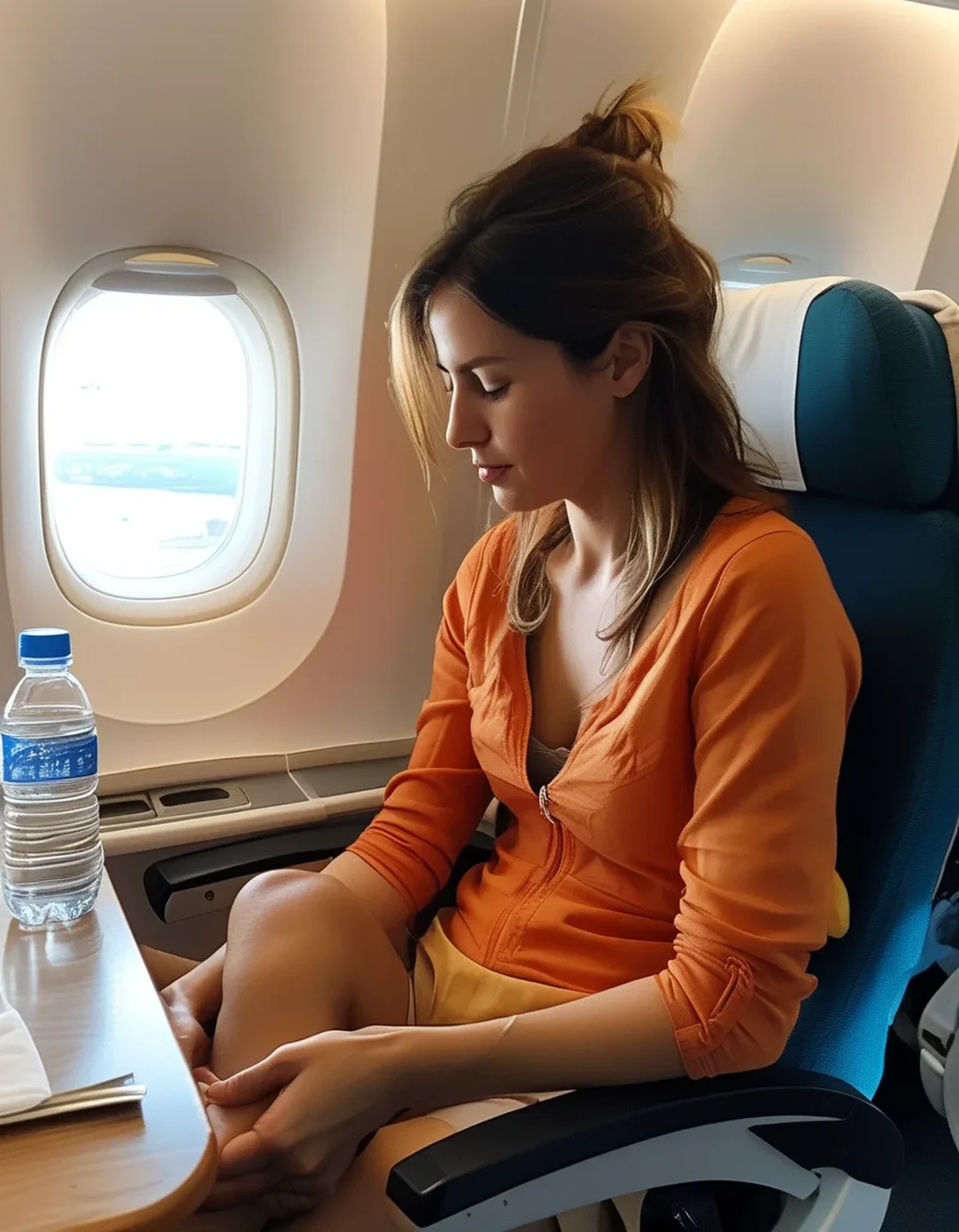
What does not work as well as people think?
Several popular measures are neutral, and a couple are worth actively skipping.
Elevating your feet on a bag. Helps modestly while you do it, and in economy it usually forces you into a posture that increases pressure behind the knee, which offsets the benefit. Not harmful, not the answer.
Aspirin as routine DVT prevention for flights. Not recommended by major guidance for healthy travellers. Aspirin has bleeding risks and there is no good evidence it prevents travel-related venous thromboembolism. Do not start it for a flight without medical advice, and do not stop prescribed medication either.
Avoiding salt on the day of travel. Sodium affects fluid balance over days, not hours, and severe restriction on travel day is more likely to leave you dehydrated. Ordinary eating plus adequate water is better.
Diuretics. Actively counterproductive. They cause dehydration, which worsens the underlying situation, and they mean more trips to the lavatory, which at least gets you walking.
Dry brushing, lymphatic massage, and drainage techniques. They feel pleasant and may provide temporary subjective relief. There is no good evidence they prevent flight swelling, and the mechanism they are described as targeting is the same pump you can activate for free by moving your ankles.
Very tight non-graduated socks. Uniform compression at the top of the calf can impede rather than assist return. If a sock leaves a deep indentation at the top, it is the wrong sock.
And one that does help slightly, unexpectedly: an aisle seat. Being able to get up without negotiating past two people substantially increases how often people actually walk, and that is the intervention that matters.
What Nobody Tells You About Post-Flight Swelling
It can peak after you land, not during the flight. Fluid that accumulated over eight hours does not clear immediately, and a lot of people notice the worst of it in the evening after arriving. Walking on arrival is more useful than resting with your feet up, though both help.
Long-haul in compression, then a long car transfer, is the worst combination. The flight is the part everyone plans for and the two-hour taxi ride afterwards adds to the same problem with none of the awareness. Keep the socks on until you have walked properly.
Heat makes it worse on arrival. Arriving into a hot climate causes vasodilation, which increases pooling on top of what the flight caused. This is why swelling after a flight to a warm destination is often notably worse than the same flight to a cool one.
Your shoes will not fit, and forcing them makes it worse. Wear something with give, or something adjustable, for travel days. A shoe that is snug at departure will be uncomfortable at arrival.
The salt-and-swelling story is backwards on planes. People often blame airline food sodium, and the dominant factor is immobility. A very salty meal contributes marginally, and eight hours of not moving your calves contributes far more.
Pregnancy, recent surgery, cancer, hormonal contraceptives, and a personal or family history of clots all raise the risk profile for travel-related thrombosis, not just swelling. If any apply, talk to a clinician before a long flight about whether you need more than compression socks and movement. This is a genuinely worthwhile conversation and it takes five minutes.
Late-summer note: this is peak long-haul season, and it is also when arrival heat compounds the problem most. If you are flying somewhere warm in the next few weeks, the compression socks matter more than they would in January, and so does walking as soon as you land rather than going straight to a taxi.
This is general information, not medical advice. Swelling in one leg only, calf pain, warmth, redness, chest pain, or breathlessness during or after a flight requires urgent medical attention.
FAQ: Flight Swelling Questions, Answered
Do compression socks actually work for flights?
Yes. Systematic reviews of randomized trials find graduated compression stockings substantially reduce leg swelling and symptomless DVT in air travellers. Use 15 to 20 mmHg graduated, correctly sized, put on before boarding.
How often should I move on a long flight?
Ankle and calf movements of 20 to 30 repetitions every 30 to 60 minutes, plus a walk down the aisle every one to two hours. Walking is more effective than seated movement.
When is swelling after a flight a medical concern?
When it affects one leg only, or comes with calf pain, warmth, redness, chest pain, or breathlessness. That combination can indicate a clot and needs urgent assessment, including in the weeks after a long flight.
TL;DR:
- Swelling happens because the calf muscle pump, which returns fluid against gravity, stops when you sit still. Cabin pressure and dry air add to it.
- What works: graduated compression socks at 15 to 20 mmHg, ankle movements every 30 to 60 minutes, and walking the aisle hourly.
- What does not: aspirin for healthy travellers, diuretics, salt avoidance on the day, and elevating feet on a bag in economy.
- Swelling often peaks after landing, and arrival heat makes it worse. Keep the socks on until you have walked properly.
One leg only, with pain, warmth, or redness, is not ordinary flight swelling. Get that assessed urgently.
Keep Reading
This article is for general informational purposes only and is not medical advice. Always consult a qualified health professional for guidance specific to you.